
UNINTENDED CONSEQUENCES
Tavishi
This Saturday, my brother/the Kradigan social media man booked an impulse flight to come visit me that day. (To be fair, he is in NYC and I am in Niagara Falls, so it's not that crazy. It's like a one hour flight.)

I still haven't processed the whole living-in-Niagara-Freaking-Falls thing. It's surreal but a really cool experience. I have discovered I really enjoy these solo sidequests. Taking a break from my regular life to go work with pinnipeds at an aquarium in NIAGARA FALLS is crazy to me. Also, people here act like Niagara Falls is Lake Pleasant. The locals do not care about the falls at all anymore. I am consistently blown away when I see the mists rising over the Niagara River. I love this internship so, so much.
My brother is now biology-pilled, I guess. He kinda lowkey started medical school in NYC.

Anyways, he was mentioning the CCR5-Δ32 mutation and how it creates HIV resistance. This made me think about all the mutations that have unintended consequences and benefits.
The word "mutation" carries a connotation of disease and destruction. And while some mutations do cause issues, mutations can be good, bad, or neutral. A mutation is merely any change to a gene. While some mutations create literally no effect on physiology, some create life-altering changes through the substitution of just one base pair. Sometimes, mutations can be both good and bad.
CCR5-Δ32 MUTATION
This mutation is found on the CCR5 gene. The CCR5 gene is responsible for encoding the C-C chemokine receptor 5 (the gene abbreviation is literally what it stands for). Chemokines are signaling proteins responsible for prompting the movement of certain immune cells. Different types of chemokines move different types of cells, and are classified based off of their functions (anti/pro-inflammatory) and structure (what amino acids are present in the protein).

CCR5 is a receptor activated by the chemokines CCL3 and CCL4. Now, chemokines are known for their unique structures formed via the amino acid cysteine. Chemokines typically have four cysteines which interact to form a 3d structure with each other. The orientation of these cysteines help to classify the types of chemokines.
For example, the C-C chemokines, like CCL3 and CCL4 have two cysteines adjacent to each other at the n-terminus (beginning of the amino acid chain).

CCR5 is a type of receptor called a G-protein coupled receptor. This means that when a ligand like CCL4 binds to the receptor, a G protein is activated, resulting in a cascade within the cell. The exact functions of the G protein in the cell are determined by the α subunit of the G protein. CCR5 has a Gαi subunit, meaning that adenylyl cyclase is downregulated, resulting in a decrease of cAMP production from ATP. This decreased cAMP results in less intracellular signalling. cAMP has a variety of functions within the cell.
Anyways, the CCR5-Δ32 mutation is a deletion of 32 base pairs in the DNA sequence encoding the CCR5 protein. This deletion results in a nonfunctional CCR5 protein in an individual.
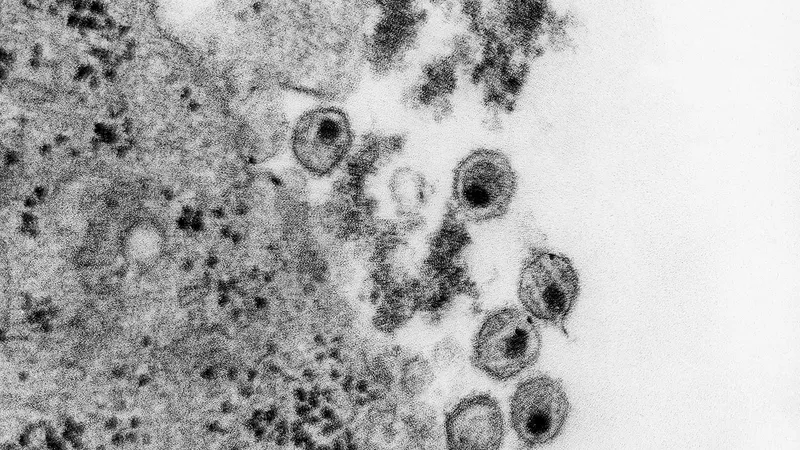
Why is this important to HIV? An important thing about viruses is that they cannot reproduce on their own. Viruses lack the machinery and environment to duplicate independently, so an essential part of their life cycle, and part of how they are so deleterious to an individual's health, is that they invade and replicate host cells. Typically, they do this by turning host cell receptors into a door allowing them entry to the body.
In the case of HIV, virions invade CD4 T cells (helper T cells) through the CCR5 receptor. It is also known to use the CXCR4 receptor, but we don't care about that. Anyways, viruses end up destroying CD4 T cells through initiation of apoptosis within the cell. This results in markedly decreased immune response.
What is particularly dangerous about HIV is when it becomes AIDS- or when the CD4 T cell count falls below 200 cells/mL of blood. This allows for the rapid proliferation of secondary infections, which is the real killer in AIDS.

AIDS has been associated with countless secondary infections, including herpesvirus, cytomegalovirus, toxoplasmosis etc. One of the most common comorbidities is Kaposi's sarcoma, a type of cancer caused by human herpesvirus 8. Kaposi's sarcoma was one of the first indicators of the AIDS epidemic during the 1980's AIDS epidemic.
Since the 80s, HIV/AIDS has become significantly less of a public health crisis in the USA because of the availability of HAART- highly active antiviral retroactive therapy. HAART allows for patients diagnosed with HIV to live a full lifespan in some cases, and significantly reduces viral load. Cases treated with HAART rarely progress to AIDS.
While HIV treatment is present, only ten individuals have been cured of HIV definitively to date, all because of the CCR5-Δ32 mutation present on transplanted stem cells. In cases of blood cancers like acute myeloid leukemia, in most patients, the only hope of recovery is a bone marrow transplant.
Again, as a side effect of AIDS, comorbidites and cancers like acute myeloid leukemia can develop. In order to treat certain aggressive blood cell cancers, oncologists expose patients to extreme radiation therapy. Without a bone marrow transplant, patients would lack virtually any immune system after this. And so, a bone marrow transplant essentially grants patients an entirely new immune system. Bone marrow contains hematopoietic stem cells- essentially, the progenitor cells that give rise to white and red blood cells alike.
When an AIDS patient receives a bone marrow transplant from a patient homozygous for the CCR5-Δ32 mutation, HIV is unable to enter their cells.
Of course, this isn't a perfectly viable solution in every case. But it is, as yet, the only successful cure to HIV. While the USA has made great strides in HIV/AIDS treatment, drug-resistant viral strains have emerged globally, and treatment access remains limited in certain countries.
.
.
.
While the CCR5-Δ32 mutation is not typically a deleterious mutation, there are several mutations that can impact an individual's life both positively and negatively. One that immediately came to mind for me was sickle-cell anemia and malaria.
SICKLE CELL ANEMIA AND MALARIA RESISTANCE
Sickle cell anemia is a genetic disorder caused by a mutation in red blood cells. The primary oxygen carrier in erythrocytes is a protein called hemoglobin. There are several types of hemoglobin, but the form primarily found in adults is hemoglobin A.
Hemoglobin A is composed of two α and β globins respectively.
A mutation on the gene encoding β-globins. or gene HBB, results in sickle cell anemia. Specifically, it is a mutation of a single amino acid; instead of a glutamate, a valine is present in position six in the amino acid change. This creates hemoglobin S.

Anyways, Hemoglobin S causes malformation of erythrocytes in those homozygous for sickle cell disease. Sickle cell anemia is an autosomal recessive disease. Those who are heterozygotes for the disease (carry one normal allele and one sickle cell allele) demonstrate no symptoms of sickle cell anemia, but are instead, resistant to malaria.

Malaria is transmitted by mosquitoes, but it is a parasitic disease. Malaria is caused by the eukaryotic parasite Plasmodium, which is carried by mosquitoes or other insects. Plasmodium eventually infects and matures in the blood, but it is found first in the liver or other organs. (Depends on the species. For this article, I'm focusing on humans. Rare moment).
sidebar 1: i forgot I can make sidebars. this is my blog and i will do whatever the shrek I want. especially make sidebars. #freewill. #sidebartimeforpinnipeds
if people were pinnipeds, i would be a very good human doctor
I could talk a lot more about the malaria life cycle, but alas, I have to wrap this up because people have no attention span.
People who are heterozygotes for sickle cell disease are typically incapable of having Plasmodium mature in their erythrocytes because of the different shape of red blood cells.
good night, pinnipeds


Comments