
GREAT BRITINNIPED
- Oct 12, 2025
- 3 min read
Tavishi
As you might know, my favorite animals are pinnipeds (wheee!!). When I was researching colleges, I also was researching the nearby pinniped species and proximity to me.

At RVC, that's the Thames pinniped populations. The Thames is a river flowing through the south of England, starting in Gloucestershire and ending in an estuary on Southend-on-Sea. At one point, the Thames was so freaking filthy (see: prior to proper waste disposal..) that it was not at all livable for any life and was certainly not potable.
AP Euro knowledge, but, the Thames is actually where cholera was discovered to be caused by contaminated water. Thanks, John Snow and Mr. Estes!

The ecological recovery of the Thames after having been the shithole of London is fascinating. I can now safely drink the tap water here, without dying!!

But also, it's incredible to see how much life is prospering here. So much so that marine mammals have begun to sneak into the river through the Thames Estuary. Marine species now found in the Thames include: harbor seals, harbor porpoises, grey seals, and bottlenose dolphins.

We also boast a European eel population, and I'm so obsessed with them. I read a really good book about eels in June, and I highly recommend it (The Book of Eels). When I say I cried over this book, I'm not joking.

Anyways, the two pinniped species found in the Thames are native to the Atlantic ocean. The harbor seal is one of the most widespread pinniped species in the world, and is also found on the Pacific coast of North America. The subspecies of the harbor seal specifically found in the Thames is the Eastern Atlantic harbor seal, or Phoca vitulina vitulina.

The gray seal has a large distribution, but still smaller than the harbor seal. The gray seal, however, is only found in the North Atlantic. In comparison to the aforementioned harbor seal, the gray seal has a much longer snout (dolichocephaly), larger nares, and just a heavier build in general. Fun fact: I've seen both of these species in the wild! I've seen harbor seals off the coast of California, and gray seals in Cape Cod, Connecticut.

One of the largest epidemiological concerns regarding the Thames pinnipeds is phocine distemper virus, which I wrote about here: https://www.kradigan.org/post/phocine-distemper-virus
Specifically, UK pinniped populations have previously been afflicted with a PDV outbreak in the late twentieth century, resulting in a population decrease. Because the population is not nearly as vulnerable as the Hawaiian monk seal population, invasive preventative measures like vaccination have not been taken. Nevertheless, the populations continue to be monitored during ZSL biodiversity surveys.
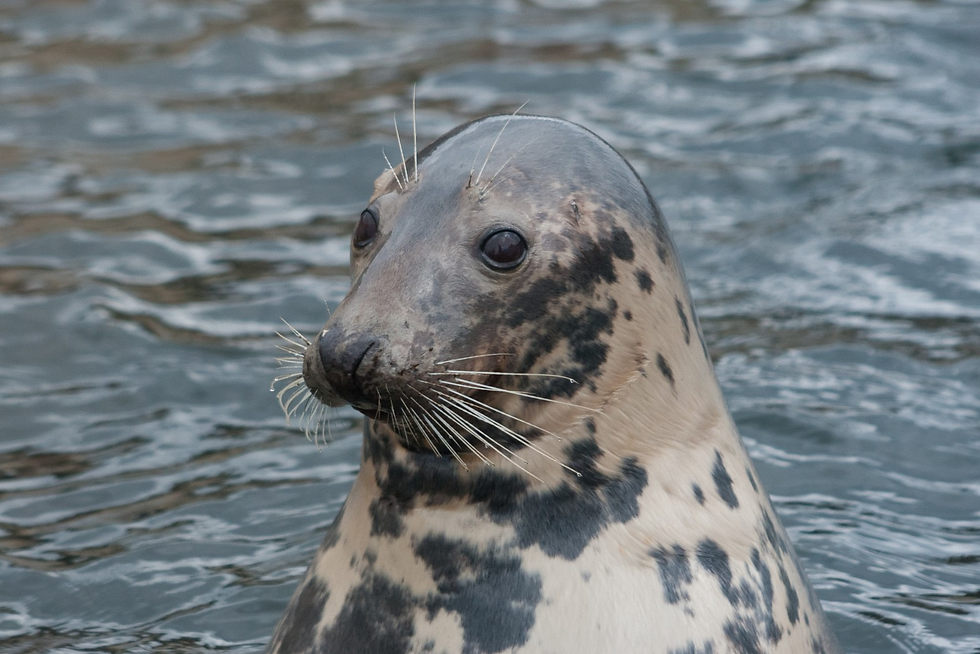
Echinophthirius horridus is a super cool (not super fun) ectoparasite. Unfortunately, a common type of parasite in any furry animal are lice, and nearly every type of pinniped has its own species or two of seal lice affecting it. Genuses of seal lice include:
Antarctophthirus
Echinophthirius
Lepidophthirus
Proechinophthirus
Most seal lice belong to the genus Antarctophthirus, individuals of which primarily are found in the Southern hemisphere, affecting lobodontine seals and species like the Australian sea lion! (wow. I totally haven't written and published a paper on this...)
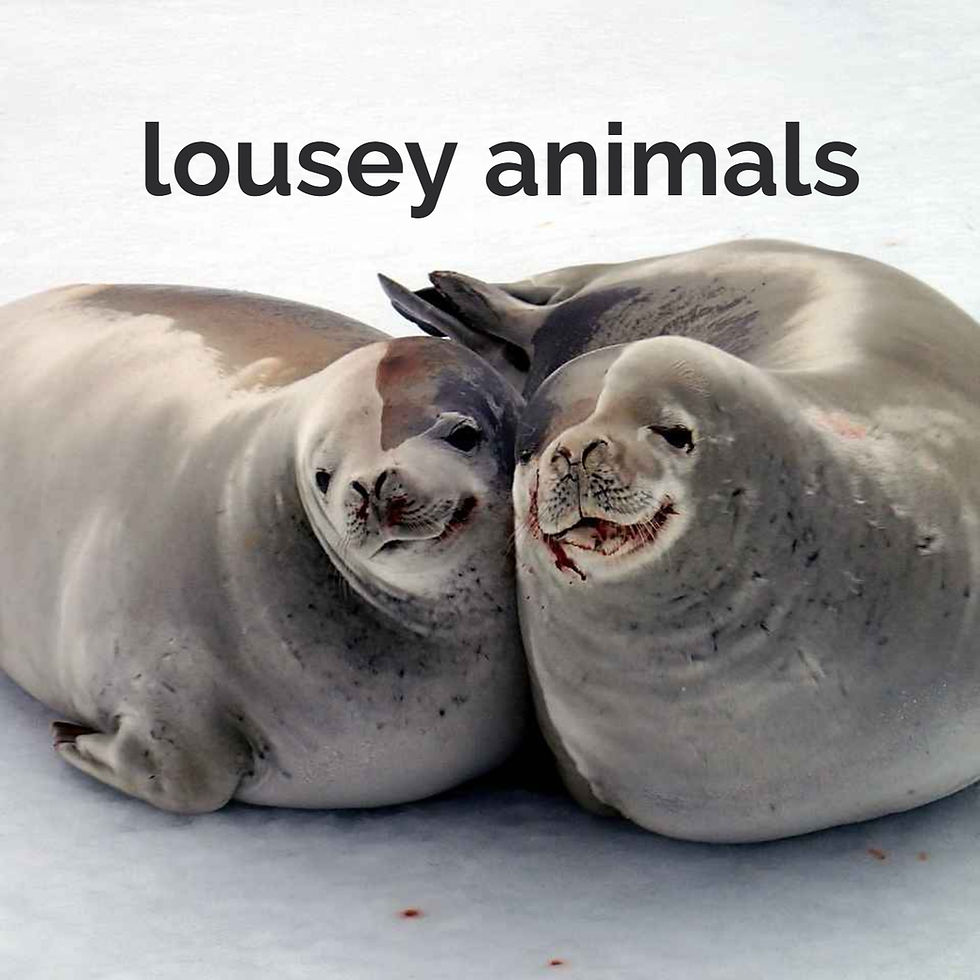
Seal lice are pretty much one and the same, and are able to withstand intense, crushign pressures to keep up with the diving of their hosts. What makes this species of pinniped even more horrible is that they are a host for yet another parasite.. Dipetalonema spirocauda, a nematode.

Another worm that infects the pinnipeds of the Thames is Otostrangylus circumlitus, or lungworm, which also infects the Northern elephant seal found along the California coast.

It's a prominent parasitic infection even in the cold waters of the Atlantic, and it's also something I wrote about earlier (i may or may not have an obsessively niche interest in the parasitopathology of pinnipeds [alliteration {jesus christ this is too many brackets}]).
Finally, an emerging threat in the Thames harbor seal population is mouth rot. This has been identified and is being monitored by the British Divers Marine Life Rescue. Mouth rot is, essentially, when the mouth of recently weaned pups starts to rot, with some ulceration getting so deep and bad that there's exposed bone. So far, we have no idea of whether or not the cause of infection is bacterial or viral, but it is something we've been studying for about five years now.


Comments