
BIRD .
Tavishi
I like birds. A lot. I also like games. The two combined gets you Birdle, but I don't like birds that much.

The middle ground game? METAZOOA! I love Metazooa, and I've put all my RVC friends onto it, too. Basically, it's taxonomy wordle. Not to flex, but..

Anyways, I am consistently tripped up by the absolute hell that is bird taxonomy. There are too many birds, and weird classifications. Even as a Wikipedia warrior, I am so fully lost on the vastness of bird taxonomy. I have been getting a lot more into birds lately, and even went birding in the Walthamstow marshes with my friend Jasmine. Lovely experience, and I had my binoculars, so I felt very official and like I had a badge of Knowing What I Was Doing. (#RealBirderCertified.)

Anyways, but I really, really need to get better at taxonomy, so this is my attempt at doing so. Sometimes I use these blog posts as a means of revision, which I fear y'all might have noticed by now.
Sidebar 1: everyone here thinks I'm a real proper certified cowboy because of the horses, my cowboy boots, every photo of Arizona, and the fact that I say y'all. I cannot deny the allegations sometimes. Yeehaw. #WokeCowboyWhoThinksWomenDeserveRights
Birds are first divided broadly into two infraclasses: Paleognathae and Neognathae. Paleognathans (is this the name for an individual?) are almost all flightless birds, but do not necessarily contain all the flightless birds. Neognathae have every single other bird. Anyways, what really sets them apart is their jaw bones. Paleognaths have more prehistoric, reptile like jaws (DINO?), which are a lot less mobile and differentiated than Neoagnath jaws. Their diets are limited thus mostly to seeds and vegetation, whereas Neoagnath jaws are much more widely differentiated.

Paleoagnaths consist of the ostriches, kiwis, emus, tinamous, and rheas. One of my professors is known for his work on dinosaur locomotion, and he uses tinamous as a model to simulate dinosaur movement. There are tinamous on a lot of our slides, it is greatly amusing.

The neoagnaths consist of Neoaves and Galloanserae. Neoaves has pretty much every bird ever, except for chickens and ducks. Those all fall into Galloanserae, which are genetically distinct from Neoaves, and are thought to have originated and diverged prior.

Neoaves can be split into ten groups. Seven are clades encompassing several orders, and three orders are on their own and not in a larger clade.
First, Telluraves, or the landbirds. This supraordinal clade does NOT encompass all landbirds, but rather serves as a sister taxon to Aequornithes. Telluraves can be further split into 2 orders: Australaves and Afroaves. Australaves consists of the falcons, parrots, seriemas, and the passeriformes, or the perching birds. These birds originate in the Southern hemisphere. The passeriformes are also the songbirds, and include corvids (crows, magpies, etc.), flycatchers, rail-babblers, chickadees, titmice, swallows, and all of the stupidsounding compoundwording bird names you expect to come from the mouth of a birder.

Sidebar 2: some of the stupidest names include the whydahs, mitrospingid tanagers, bearded reedling. I can't. I like birds, hate ornithologists.
The Afroaves has some more fun birds, and not just the obscure binocularhaver birds. Among Afroaves are the woodpeckers, toucans, kingfishers, hornbills, trogons (sorry what is this name), cuckoo rollers (again. WHAT?), owls, and raptors (falcons are the orphan birds of prey..).

In relation to the arboreal landbirds, we have the water birds, or Aequornithes, which has the herons, storks, cormorants, albatrosses, and penguins. Essentially, all the non bird shaped waterbirds. All the bird shaped waterbirds are in Galloanserae because they are older (we think). There are also flamingoes and grebes.

Flamingos and grebes fall in the clade Mirandornithes, which is just a group of... those birds! Note, despite the child at the London Zoo who boldly proclaimed a scarlet ibis was a flamingo, they are different in origin, and just happen to be similarly strange. Scarlet ibises are in Aequornithes.
Columbimorphae has pigeons, mesquites, and sandgrouse.

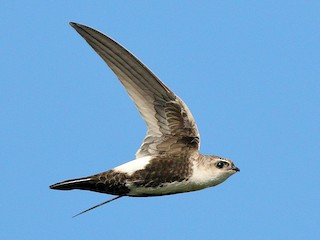
One of my favorite groups is the clade Strisores, which includes nightjars, swifts, and hummingbirds. Arizona is home to a lot of lovely hummingbirds, like Anna's hummingbird and the Ruby-throated hummingbird. I really enjoy their unique head shape, and their sharp wings (something something trailing vortices).
From this clade, my favorite species is easily the White throated swift, partially because I can identify them from their call alone (which. really isn't a feat for a properbirder but I am inexperienced), and spent a really, really, really long time trying to figure out what birds they were.
The Otidimorphae is a supraordinal clade including the bustards and cuckoos, of which I don't think I've seen any species in the wild. They're very flamboyant showy birds, and I appreciate that.

^ caption of above bustard is for my flatmate Lynn, bless her. She likes birds and Hamilton (she also likes classics but that is beside the point). This post is also for her. Everyone say, "THANK YOU, LYNN!"
Finally, there are the Eurypygimorphae, which famously include the tropicbirds and sunbitterns. One genus belonging to this group is Phaethon, or the genus of tropicbirds, which are kinda like Aldi seagulls. I mention this because Lynn likes Greek mythology, and Phaethon is the sun of Helios (this is a pun).

Finally, two groups of Neoaves remain. First, the order Opisthocomiformes, including hoatzins, which are goofy little colorful pheasants. I can comfortably say I've never seen one of these in the wild, as they're found mostly in Ecuador, Guyana, etc. I am currently in London. A little far off. Only a little. Strangely enough, these birds are just horses with wings (just like how dolphins are also canonically horses). I say this meaning that they ferment their plant matter, which is? not a thing for a bird.

sidebar 3: I love school. we do so much comparative anatomy, it's incredible. We learned very in depth about the different stomach types in birds and mammals. Fish have a diffused pancreas. Pigs can't swallow pills. Horses are just broken.
Finally, Gruiformes includes the cranes and the rails.


Comments